
Disaster Prevention & Response Centers
Coastal Infrastructure Disaster Prevention & Response Centers
Built for Possibility - Built for Generations
Nano-activated cements, coatings and sealant systems that perform where others cannot. Ultra-durable. Super-hydrophobic. Self-monitoring. Self-repairing.
OceanCore and ReefBond restore marine ecosystems. CarbonCrete transforms biomass. NanoRebar replaces corroding steel. RapidAnchor flash-set cement, delivered by drone. Deployed directly to breached embankments and critical infrastructure. AquaBarrier flood culverts redirect flow away from residential areas, Buying critical time for evacuation and recovery. Fast. Precise. Life-saving.
That is why we build Excellence Hubs. Permanent centers of disaster preparedness, community resilience, and materials innovation. Each Hub serves as a rapid response depot, stocked with flash-set cements, drone delivery systems, and flood diversion culverts. A community resource centre for the long-term. Nano-activated materials for coastlines, infrastructure, and ecosystems around them.
From the Pacific Islands to the Gulf Coast. From coastal West Africa to Southeast Asia. Seven product lines. Seven high-growth global sectors. Each one aligned to sovereign priorities, ESG mandates, and the net-zero transition.
Vicon Technology Advanced Materials. We welcome partners ready to build a more resilient world.
With us.
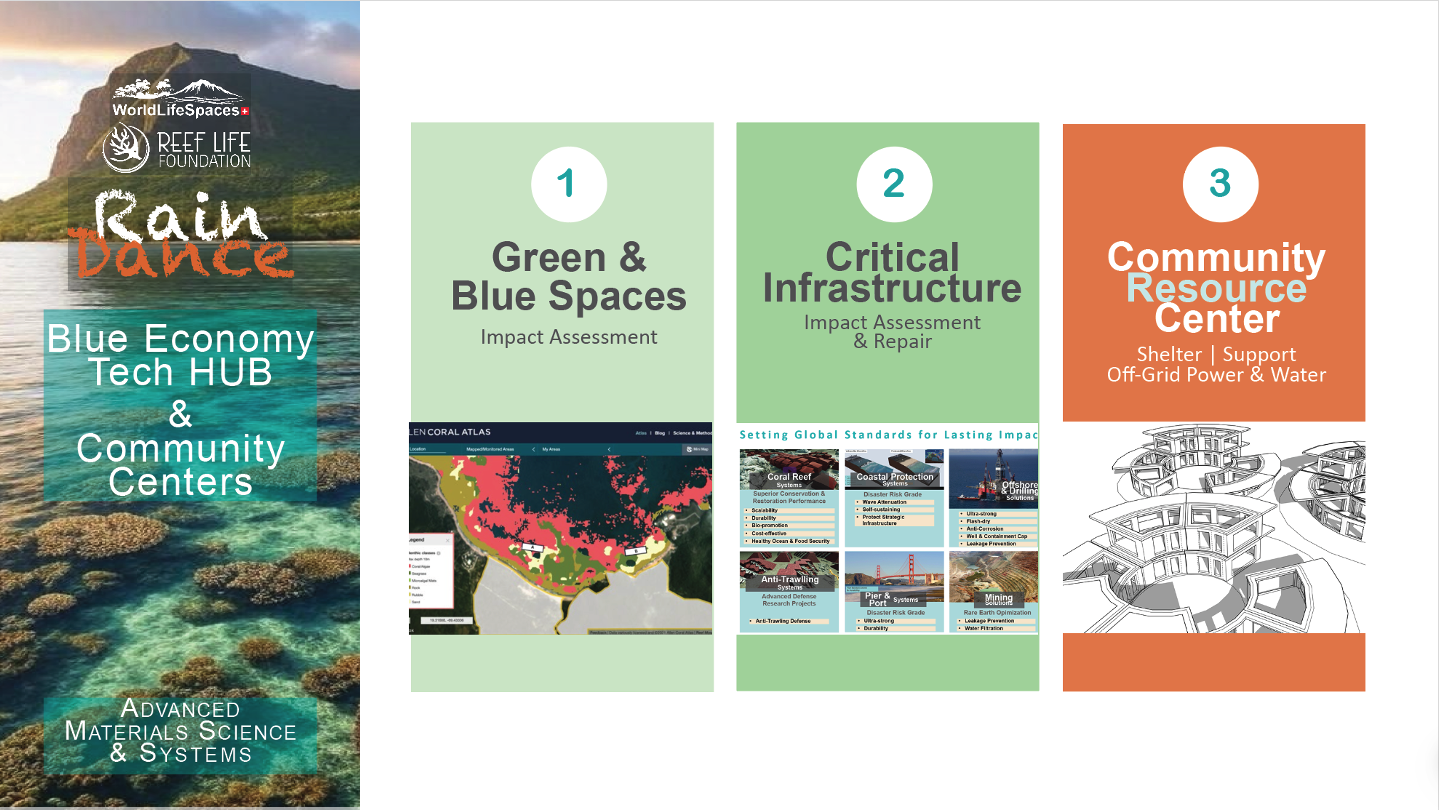
Community Resource & Resilience Centers
Design concept and services for small and medium-size companies.
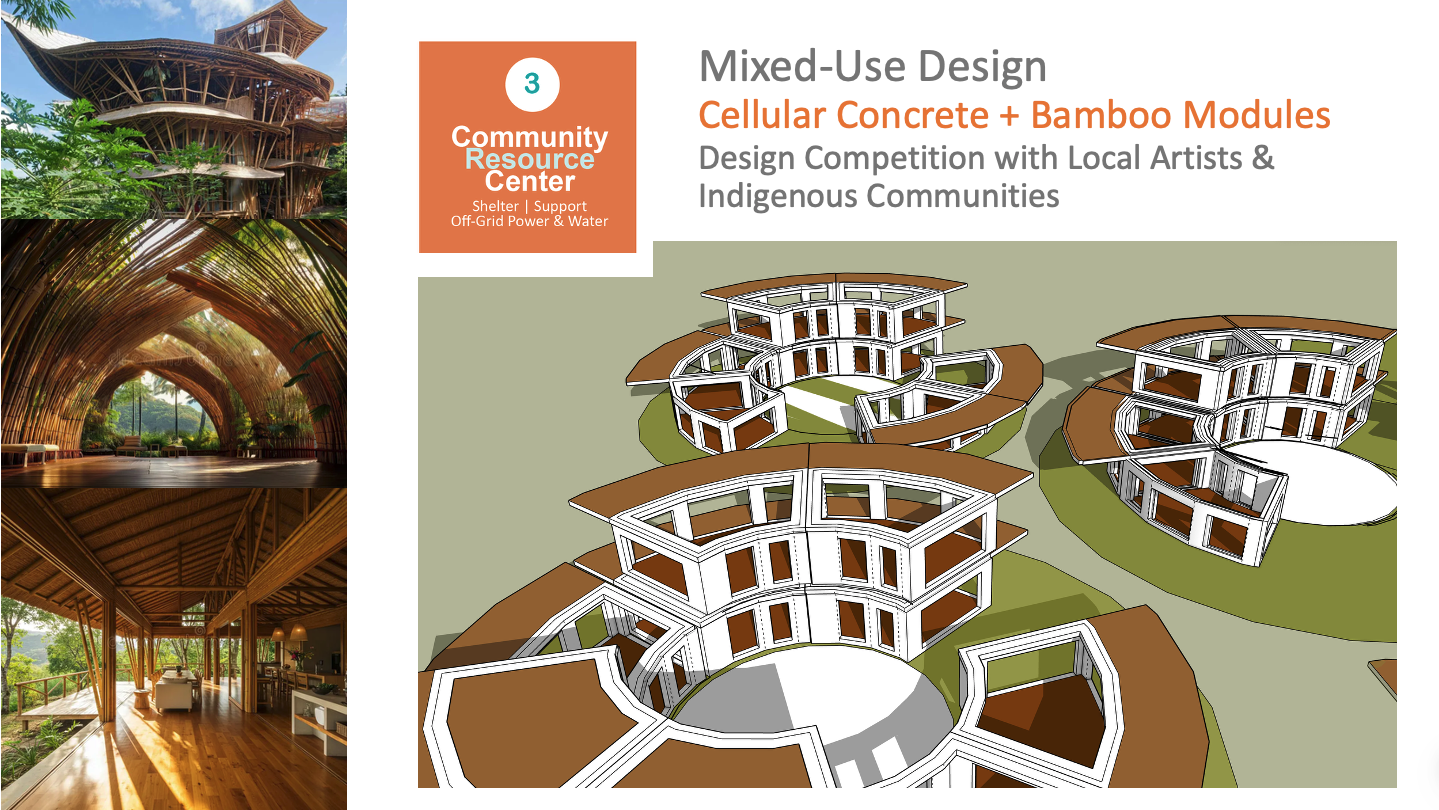
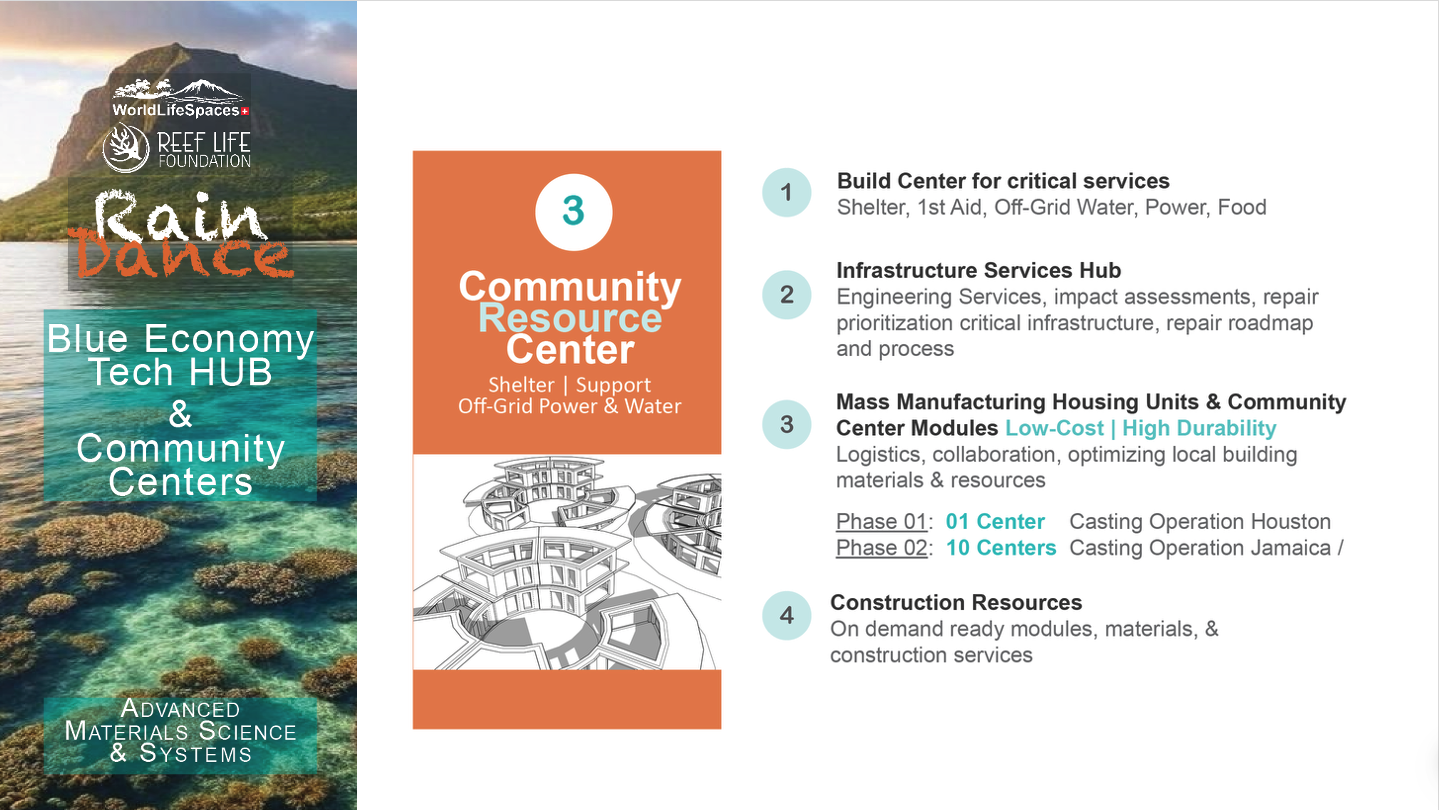
a) Integrated & Scalable Storm Resistant Housing Solution| Community Resilience Centers
Pre-fabricated low-cost modules, high-quality. See reference material with the links below:
Dark Skies key contribution: emergency shelter, 1st response services, off-grid energy, water treatment, medical, org.
Blue Skies key contribution: Center services towards community/ small and medium businesses - blue economy / housing solutions.
We developed a 2 phase concept note developed for UNDP DRR Geneva / Jamaica and the local World Bank office. Ronald Jackson confirmed his availability to our conversation.
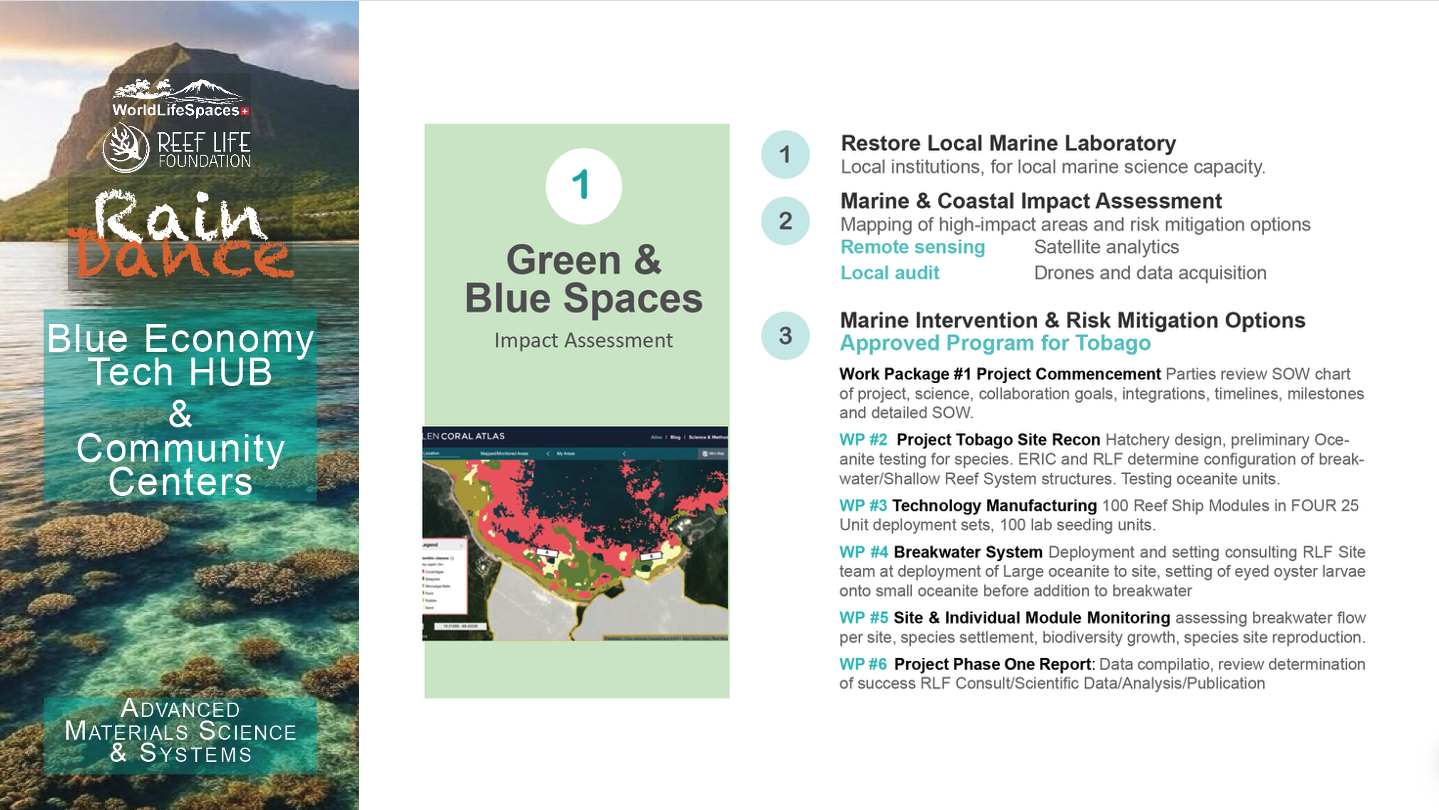
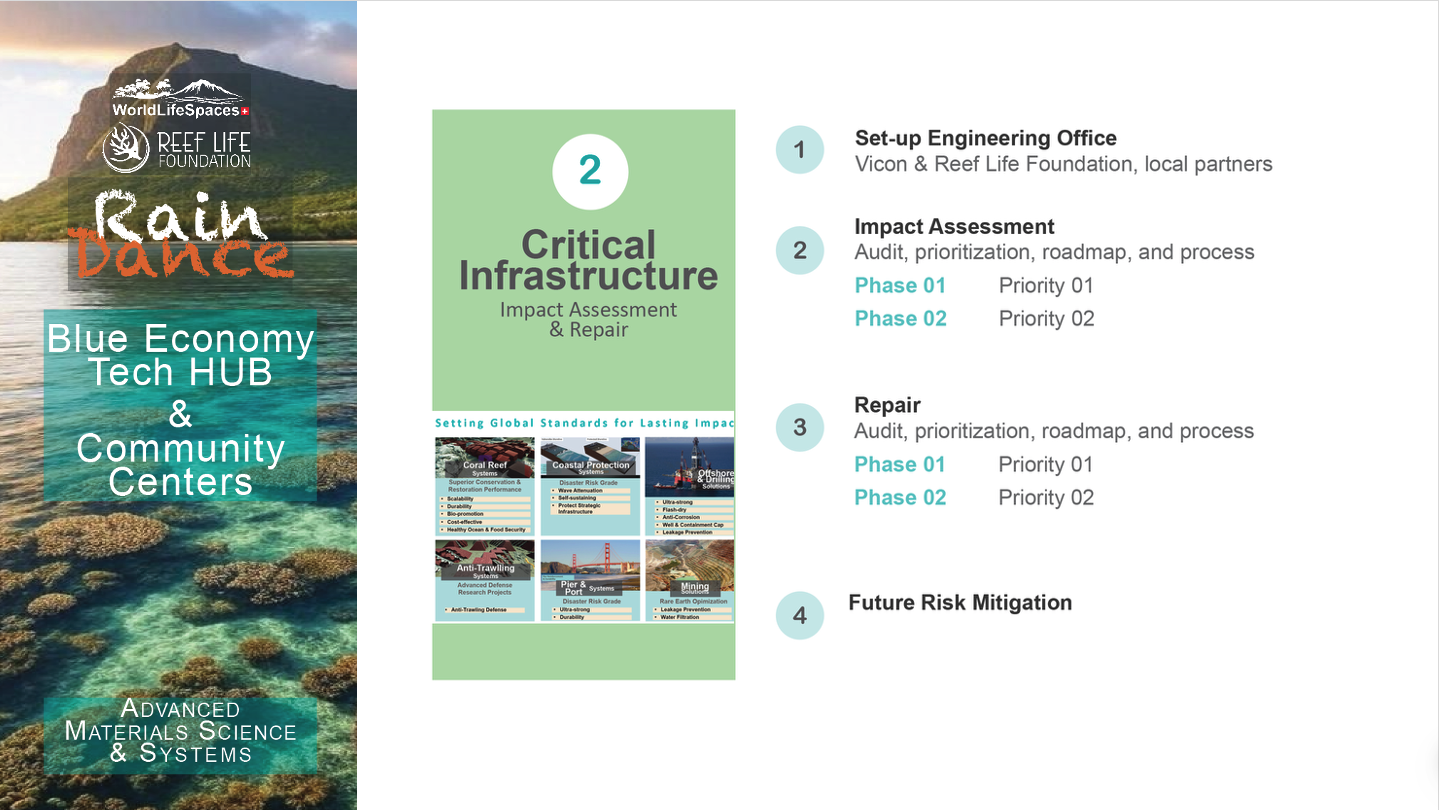
b) IntelliReef Ocean Lab & Manufacturing
Integrated part of the Community Resilience Centers.
Dark Skies key contribution: Flash-set repair of breached critical infrastructure
Blue Skies key contribution: Storm and food risk prevention, coral and ocean floor substrate towards coastline protection and ocean farming and health. See reference material with the links below:
Deep Dive
Technical Background & Manufacturing
With more than half of the world’s 7 billion people living in cities, urbanization presents an opportunity to transform production and income levels in developing countries.
However, 55++ million new slum dwellers have been added to the global population since 2000. It is unacceptable today that about 1 billion people live in slums and other sub-standard housing, with precarious guarantee of access and inadequate water and sanitation.
By 2030, about 3 billion people, or about 40 percent of the world’s population, will need housing, basic infrastructure and services. This renders into the need of complete 96,150 housing units per day, with documented land, until 2030.
Small– and one apartment complex can be created, floor, footing, walls and roof for LESS than $10,000. PER 8 Unit Complex, in materials, including steel reinforcement.
Cellular Concrete with Vicon Strength Admixtures builds Quality, and can incorporate the rubble and industrial waste so that higher carbon credits per project can be sold to help fund the construction.
While some cities are shrinking, many urban centers are having rapid and largely uncontrolled population growth, creating a pattern of rapid urbanization. Most of this growth is now taking place in developing countries and is concentrated in informal settlements and slum areas. The total demand housing is a measurement based on two aspects: the growth of the population and the need for replacement housing units.
Developing countries usually face grave housing deficits and the following hurdles against dwelling construction have been typically pointed out: high interest rates, elevated social taxes, high informal labor indexes, and bureaucracy. Lack of loan is an additional problem as banks may not be interested on funding or because governmental programs are scarce. As a result, a considerable percentage of the population in developing countries still lives at sub-dwelling units.
The housebuilding industry is changing. Market forces are driving the industry to reconsider their approach to serving their customers. Government agendas on Rethinking Construction, planning policy and building regulations are forcing the industry to reconsider the way houses are built. These issues together with a construction skills shortage and a huge demand for new houses mean that innovative construction types are being developed and used.
Aiming at lowering costs of households, scientific attention has been given to durable non-conventional building materials with similar features as those presented by construction materials traditionally used in civil engineering. Quest for such surrogate materials can be two-fold interesting as (i) it may help to reduce dwelling deficits (particularly in developing countries) inasmuch as cheaper houses become economically feasible and (ii) it can be environmentally friendly as low-value wastes can be recycled or exploited. Accordingly, this review is particularly interested in agroindustrial residues or by-products as prospective non-conventional construction materials, combining some approaches such as the use of vegetable fibers as reinforcement, the use of nanotechnology, extrusion processing and functionally graded materials.